

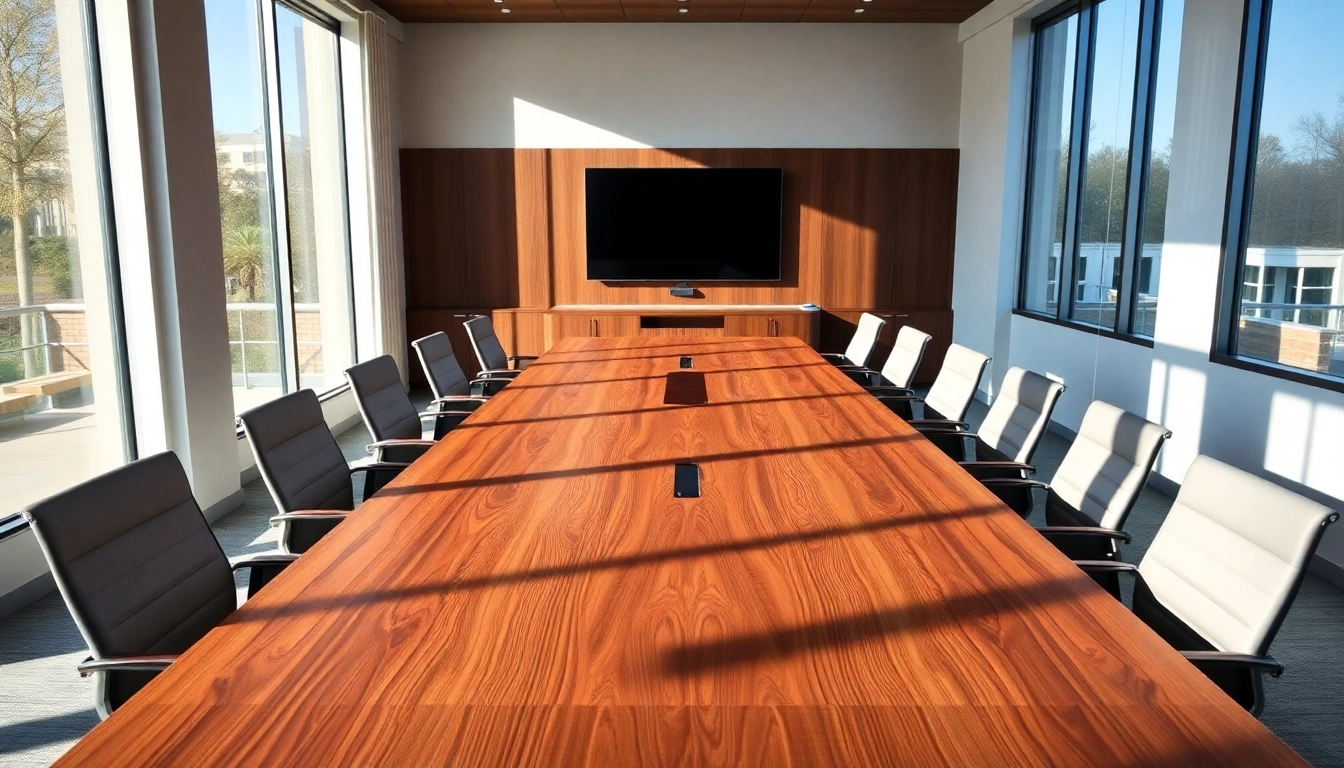
Understanding the Importance of a Conference Table
When it comes to creating an effective meeting environment, the choice of furniture is paramount. A quality Conference table serves not just as a functional piece of furniture but as a centerpiece that sets the tone for collaboration and creativity. The right table can facilitate discussions, inspire innovation, and enhance the overall aesthetic of your meeting space. Thus, investing in a well-designed conference table is essential for any organization aiming to cultivate a professional image.
Why a Quality Conference Table Matters
A conference table is where ideas are born, strategies are formulated, and business relationships are strengthened. The importance of a quality conference table cannot be overstated, as it directly impacts productivity and collaboration. A poorly designed table can create discomfort, hinder communication, and even distract from the agenda at hand. Conversely, a well-constructed table can promote engagement, encourage teamwork, and provide an inviting atmosphere for both employees and clients.
Key Features of Effective Conference Tables
- Durability: A conference table should withstand daily use, made from robust materials that can endure wear and tear.
- Size and Shape: The dimensions and the configuration can influence the dynamics of meetings. Larger spaces may benefit from rectangular or oval tables, while smaller areas might find round tables more conducive to conversation.
- Power Integration: Modern conference tables often come with built-in power sources and data ports to support technology during meetings.
- Customization: The ability to tailor features and finishes to align with your corporate branding is vital for a cohesive office design.
Choosing the Right Size and Shape for Your Space
The size and shape of your conference table should reflect the needs of your business. Tables are available in various configurations—rectangular, round, and oval, each with its unique benefits. For a more traditional setting, rectangular tables are a staple, allowing ample space for documents and electronic devices. In contrast, round tables can foster a sense of equality among participants, making them ideal for brainstorming sessions. When choosing your table, consider how the shape will influence interactions and ensure that it fits comfortably within your meeting space.
Materials Utilized in Modern Conference Tables
Benefits of Solid Hardwood Construction
Solid hardwood construction is a hallmark of high-quality furniture, particularly for conference tables. Unlike laminate or veneer, solid wood offers durability, longevity, and timeless beauty. It can resist scratches and dings, maintaining its appearance over the years. More importantly, solid wood can be refinished to rejuvenate its look, making it a sustainable choice. Additionally, each type of wood has its unique grain and coloration, allowing for a truly personalized finish that enhances the aesthetic of your office.
Comparative Analysis of Wood Types: Walnut, Maple, and Oak
Different wood types bring distinct qualities to a conference table. Walnut, known for its rich, deep tones, exudes elegance and sophistication, making it perfect for executive spaces. Maple, with its light color and fine grain, offers a clean and modern look, ideal for contemporary offices. Oak is incredibly durable and provides a rustic charm, often favored in traditional settings. Each wood type not only affects the appearance of the table but also its cost and maintenance requirements, so selecting the right one can greatly influence your investment.
Integrating Sustainable Sourcing in Furniture Manufacturing
In today’s eco-conscious world, sustainability in furniture manufacturing has become increasingly important. Many manufacturers, including those producing high-end conference tables, are adopting sustainable sourcing practices that minimize environmental impact. This involves using wood that is harvested from responsibly managed forests, ensuring that your conference table not only enhances your office aesthetic but also aligns with your values. By prioritizing sustainably-sourced materials, businesses can contribute to conservation efforts while enjoying beautiful, durable furniture.
Customization Options for Your Conference Table
Designing a Conference Table that Fits Your Brand
Custom conference tables allow organizations to express their brand identity through design. From the choice of wood and finish to the configuration of the table itself, customization options can reflect your company’s personality and values. This can enhance your corporate image during meetings with clients or stakeholders, as a well-designed table communicates professionalism and attention to detail.
Exploring Surface Finishes: Stains and Treatments
The finish of your conference table is more than cosmetic; it protects the wood and affects its durability. Stains can dramatically alter the appearance, allowing you to match the table to your corporate color scheme or interior design. Options for finishes include oils, lacquers, and varnishes, each offering different levels of sheen and protection. Choosing the right finish not only enhances the beauty of the wood but also extends the life of the table.
Advanced Power Integration Features for Modern Meeting Rooms
As technology becomes increasingly integral to business meetings, advanced power integration features in conference tables are essential. Many modern designs include built-in charging ports, data connections, and cable management systems that keep cords organized and out of sight. These systems empower teams to collaborate effectively without the clutter of electrical cords, enhancing the overall atmosphere of the meeting room.
Trends in Conference Table Design for 2026
Minimalism vs. Maximalism in Conference Rooms
As we approach 2026, conference room designs are embracing a significant shift towards minimalism and maximalism. Minimalist designs focus on simplicity and functionality, often featuring clean lines and muted colors to create a serene working environment. On the other hand, maximalist designs are gaining traction for their bold colors and intricate patterns, aiming to inspire creativity and dynamism in meetings. Choosing a style depends on the company culture and the impression you wish to convey.
The Rise of Collaborative Meeting Spaces: Round vs. Rectangular Tables
With an increasing emphasis on teamwork, collaborative meeting spaces are on the rise. Round tables are becoming more popular as they encourage discussion and interaction among participants. Rectangular tables, however, remain essential for formal presentations and larger groups. Understanding the dynamics of your team will help in making the right choice for your conference table design.
Technological Innovations Shaping Conference Room Furniture
Technological advancements are transforming the function of conference tables. Integration of smart technology, such as touch-controlled screens and video conferencing capabilities directly embedded into the table, is becoming commonplace. These innovations not only improve functionality but also enhance the user experience, making meetings more efficient and engaging.
Practical Tips for Selecting Your Conference Table
Assessing Your Meeting Space’s Layout and Workflow
Before purchasing a conference table, assess your meeting space’s layout and workflow. Consider the number of people who typically attend meetings and the types of discussions that take place. This will guide you in selecting the right size and shape that fits both the space and the intended purpose, ensuring that everyone can participate comfortably.
How to Coordinate with Other Office Furniture
Coordination with existing office furniture is crucial. The conference table should complement other pieces in terms of style, color, and materials to create a cohesive look throughout the workspace. This not only enhances the aesthetic but also promotes a sense of unity in the office environment.
Ordering and Delivery Expectations for Custom Tables
When ordering a custom conference table, it’s essential to understand the timeline for production and delivery. Custom tables can take several weeks to build, so planning ahead is vital. Ensure you communicate your expectations clearly with the manufacturer and inquire about any potential delays that may arise during the process.